Miriam Lancaster went to a Vancouver ER in pain — and was offered MAID before anyone told her what was wrong. In less than a year, Canada plans to expand the program to mental illness.
When 84-year-old Miriam Lancaster woke up in excruciating pain last April, her daughter called an ambulance. Lancaster was taken to the emergency department at Vancouver General Hospital with what turned out to be a fractured sacrum — a break in a small bone at the base of the spine. She wanted a diagnosis. She wanted treatment. What she got, she says, was an offer to end her life.1
Lancaster and her daughter, Jordan Weaver, allege that a young doctor raised the option of medical assistance in dying before Lancaster had been told what was wrong with her. Weaver’s account is specific: the doctor said she understood Lancaster was in a lot of pain, then offered MAID. Lancaster had not asked about it. She had not requested it. She had not yet received a diagnosis.2
“I was taken aback,” Lancaster said in a video testimony that has since been viewed hundreds of thousands of times on X. “That was the last thing on my mind. I just wanted to find out why I was in pain. I did not want to die.”
❝ I was taken aback — that was the last thing on my mind. I just wanted to find out why I was in pain. I did not want to die.
— Miriam Lancaster, 84, Vancouver, April 2025Lancaster spent a month in hospital. She came home, recuperated, and started travelling. She went to Cuba. She went to Mexico. In February 2026, she climbed the Pacaya Volcano in Guatemala. The woman a doctor offered to help die is climbing volcanoes.
It was not Lancaster’s first encounter with MAID. Her husband, John, died of metastatic cancer in 2023. Ten days before his death, he collapsed at home and was rushed by ambulance to Vancouver General Hospital — the same hospital. Lancaster says a doctor told the family he was required by law to offer MAID. The priest was at John’s bedside, ready to administer last rites. The communion bread was in his hand. Then the doctor walked in and delivered the line, Lancaster wrote in The Free Press, “as though he were reading from a script.”3
Lancaster is not an activist. She did not file a complaint. She wanted to forget about it. But her story landed in the middle of a growing national debate about whether Canada’s assisted dying regime has outpaced its safeguards — and whether the system is now offering death to people who never asked for it.
The numbers tell a striking story of their own.
In 2024, 16,499 Canadians died through MAID — 5.1% of all deaths in the country, or roughly one in every twenty. Since legalization in 2016, more than 76,000 Canadians have died through the program. The year-over-year growth rate is slowing, but the total continues to climb every year.4
She had a broken bone. She recovered in a month. She climbed a volcano.
Nearly half of MAID recipients in 2024 reported feeling like a burden on family, friends, or caregivers. Almost 58% of those on Track 1 — where death is reasonably foreseeable — reported emotional distress, anxiety, fear, or existential suffering, a significant jump from 39% the year before.5
And the program is about to get wider. On March 17, 2027 — less than twelve months from now — the federal exclusion barring people whose sole underlying condition is a mental illness from accessing MAID is scheduled to expire. The exclusion has already been delayed three times: from March 2023 to March 2024, then to March 2027. Each time, the Liberal government acknowledged the health system was not ready. Each time, the sunset clause remained in place.6
The Centre for Addiction and Mental Health — Canada’s largest psychiatric hospital — has called for a delay because there is no consensus among practitioners on when a mental illness can be considered “irremediable” for the purposes of MAID. There are no established clinical guidelines for making that determination. CAMH does not provide MAID and does not provide MAID eligibility assessments for mental illness.7
Alberta is not waiting. On March 18, 2026, Premier Danielle Smith’s government tabled Bill 18, the Safeguards for Last Resort Termination of Life Act. The bill would permanently prohibit MAID in Alberta for anyone whose sole condition is a mental illness — regardless of what the federal government does in March 2027. It would also ban Track 2 MAID entirely, prohibit doctors from initiating conversations about MAID with patients, bar referrals out of province for MAID assessments, and require a direct family member to be present when MAID is administered.8
Smith was direct about what prompted the bill. “Those struggling with severe mental health challenges need treatment, compassion and support,” she said, “not a path to end their life at what may be their lowest moment.”
❝ Those struggling with severe mental health challenges need treatment, compassion and support, not a path to end their life at what may be their lowest moment.
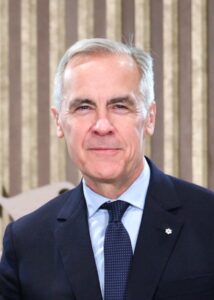
— Danielle Smith, Premier of Alberta, March 18, 2026The Liberal government has said nothing about Miriam Lancaster. It has said nothing about whether the March 2027 mental illness expansion will proceed as scheduled, be delayed again, or be cancelled. Mark Carney has not addressed the question publicly. The only federal policy statement on the record is from 2024, when then-Health Minister Mark Holland said the health system was “not yet ready” — then left the sunset clause in place.
Miriam Lancaster had a fractured bone. She recovered in a month. She climbed a volcano. She is alive because she said no. In less than a year, Canada plans to extend the offer of death to people suffering from depression. The question is not whether the system is ready. The question is whether anyone in Ottawa is paying attention to what the system is already doing.
Every source. Every contradiction. Yours to share.