The largest single-day protest in American history drew crowds in all 50 states and a dozen countries — and the administration's response was to dismiss them as 'deranged.'
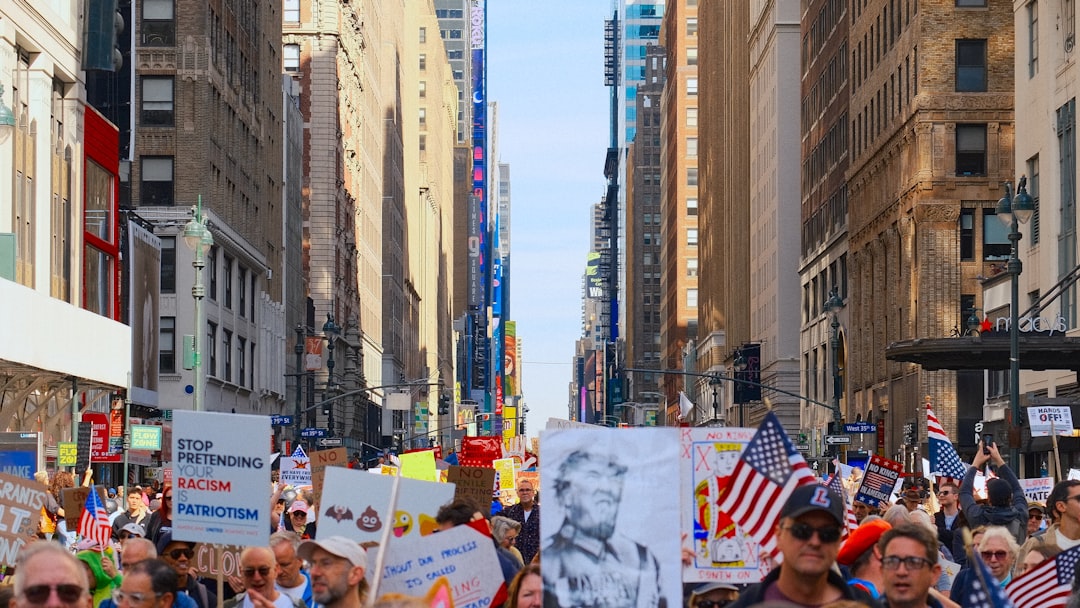
On Saturday, March 28, an estimated eight million Americans took to the streets in what organizers and historians are calling the largest single-day protest in American history. More than 3,300 events were held in all 50 states, from New York City to Driggs, Idaho — a town of fewer than 2,000 people in a state Donald Trump carried with 66% of the vote. Rallies also took place in more than a dozen countries, from Rome and London to Paris and Amsterdam.1
The White House’s response was to call them “Trump Derangement Therapy Sessions.”
The flagship event was at the Minnesota State Capitol in St. Paul, where organizers estimated more than 200,000 people attended — surpassing the numbers from the 2017 Women’s March in the same city. The choice of location was deliberate. Minnesota became the epicentre of resistance to the Trump administration’s immigration crackdown after federal agents fatally shot two Americans — Renee Good and Alex Pretti — who were monitoring enforcement operations in Minneapolis earlier this year.2
❝ Your strength and your commitment told us that this was still America. And this reactionary nightmare, and these invasions of American cities, will not stand.
— Bruce Springsteen, St. Paul, Minnesota, March 28, 2026Bruce Springsteen headlined, performing “Streets of Minneapolis,” a song he wrote in response to the killings. Before he played, he addressed the crowd directly. “Your strength and your commitment told us that this was still America,” he said. “And this reactionary nightmare, and these invasions of American cities, will not stand.”
The bill included Joan Baez, Jane Fonda, Senator Bernie Sanders, Governor Tim Walz, Lieutenant Governor Peggy Flanagan, Attorney General Keith Ellison, and Representative Ilhan Omar. Robert De Niro appeared by video, saying he wakes up depressed every morning because of Trump but was happier knowing millions were protesting. Protesters held a massive sign on the Capitol steps: “We had whistles, they had guns. The revolution starts in Minneapolis.”3
The protests were not confined to blue cities. Organizers said two-thirds of RSVPs came from outside major urban centres — including communities in conservative-leaning states like Idaho, Wyoming, Montana, Utah, South Dakota, and Louisiana, as well as competitive suburban areas of Pennsylvania, Georgia, and Arizona. In Topeka, Kansas, rally-goers impersonated a frog king and Trump as a baby. Wendy Wyatt drove from Lawrence with a “Cats Against Trump” sign, saying, “There are so many things” about the administration that upset her, “but this is very hopeful to me.”4
8 million marched. The White House called it a therapy session.
In Washington, hundreds marched past the Lincoln Memorial and into the National Mall, carrying signs that read “Put down the crown, clown” and “Regime change begins at home.” About 40,000 people marched in San Diego. Tens of thousands filled Manhattan. Around 200,000 rallied in Chicago. In Los Angeles, authorities deployed tear gas near a federal detention centre — one of the few incidents of tension in an otherwise peaceful day. The NYPD reported zero protest-related arrests across all five boroughs.5
The grievances were broad and specific. The war in Iran. The killings of Good and Pretti. Immigration enforcement. Rising gas prices. The rollback of transgender rights. The release of the Epstein files and what protesters called a “lack of prosecution.” The concentration of billionaire economic power. The feeling, expressed by protester after protester, that the president governs like a monarch rather than a democratically elected leader.6
“He keeps lying and lying and lying and lying, and no one says anything,” one protester told AFP in Washington. “So it’s a terrible situation we’re in.”
❝ I’m so frustrated that he can so flippantly say ‘some lives will be lost.’ But he doesn’t put anything on the line. He’s a draft dodger himself, his kids don’t do it. So he’s talking about our kids.
— Katherine Arnold, physical therapist, Eastern Shore, MarylandKatherine Arnold, a physical therapist from Maryland’s Eastern Shore, said she was appalled by Trump’s comments on the Iran war. “I’m so frustrated that he can so flippantly say ‘some lives will be lost.’ But he doesn’t put anything on the line. He’s a draft dodger himself, his kids don’t do it. So he’s talking about our kids.”
The administration’s response was dismissal. White House spokesperson Abigail Jackson said the “only people who care about these Trump Derangement Therapy Sessions are the reporters who are paid to cover them.” The National Republican Congressional Committee called them “Hate America Rallies” where “the far-left’s most violent, deranged fantasies get a microphone.”7
Trump himself had dismissed the previous round in October by telling reporters, “I’m not a king.” His approval ratings have since hit new lows.
This is the third No Kings protest in less than a year. The first, on Trump’s 79th birthday in June 2025, drew an estimated five million people. The second, in October, drew seven million. Saturday’s drew eight million across more than 3,300 events — each round larger than the last. The movement has grown from a single-day protest into what organizers describe as a permanent infrastructure of resistance: mutual aid networks, ICE watch operations, voter registration drives, and community organizing in all 50 states.8
Eight million people marched in the largest single-day protest in American history. They marched in New York and in a town of 2,000 in Idaho. They marched in deep-red Kansas and swing-state Pennsylvania. They marched against the war, against the deportations, against the killings of two Americans by their own government’s agents. Springsteen played. Sanders spoke. De Niro appeared by video. Two-thirds of the participants came from outside major cities. The White House called it a therapy session. The NRCC called it a hate rally. Zero arrests were made in New York. The only tear gas was in Los Angeles, at a federal detention centre. This was not a fringe event. This was not a coastal phenomenon. This was the country — all 50 states, red and blue, urban and rural — telling its president that it does not want a king.
Every source. Every contradiction. Yours to share.