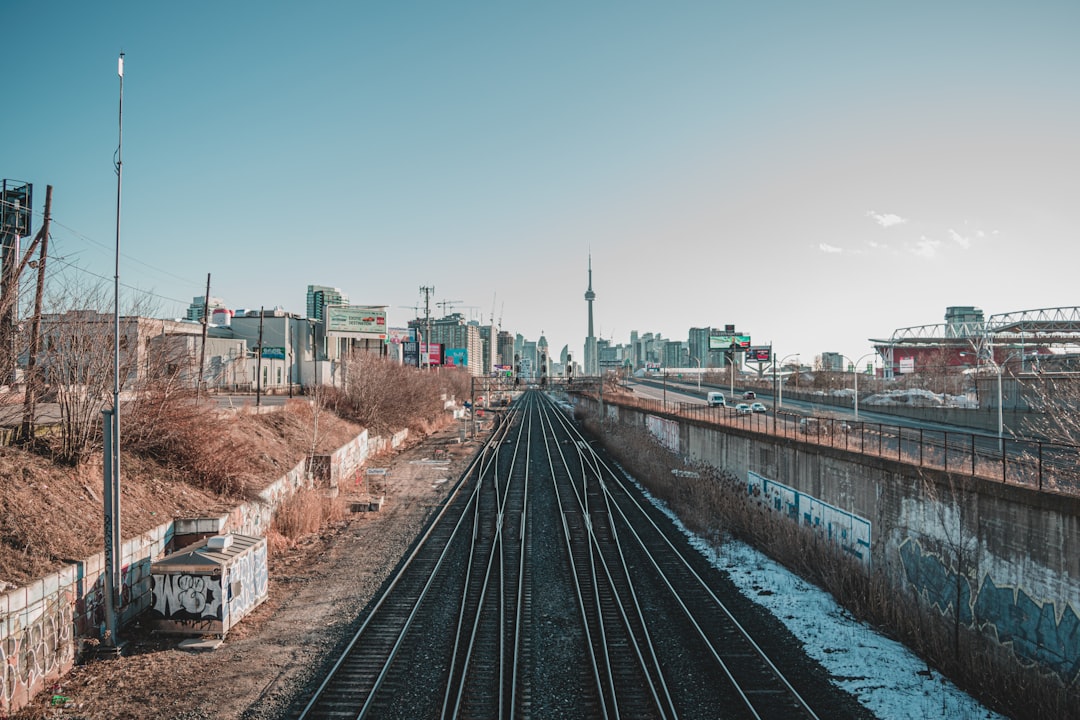
The Alto high-speed rail project would cost up to $90 billion to connect Toronto and Quebec City. California's identical project has ballooned from $33 billion to $128 billion with zero track laid after 18 years. Canada has no national standards, no workforce, and no explanation for why this money wouldn't be better spent on energy, AI, or defence.
On a 60 Minutes broadcast this week, California congressman Vince Fong summarized the most expensive infrastructure failure in American history in one sentence: “We’re now in 2026. There are no trains. There’s no track laid. It was a complete bait and switch.” California’s high-speed rail was approved by voters in 2008 with a $33-billion price tag and a 2020 completion date. Eighteen years later, the state has spent more than $18 billion. The estimated total cost has ballooned to $128 billion. The project has been scaled back from Los Angeles–San Francisco to a 171-mile segment connecting Bakersfield and Merced — two cities that nobody asked to be connected. There is no confirmed train supplier. The federal government pulled $4.2 billion in funding. California dropped its lawsuit to recover it. The state’s own transportation secretary admitted: “There were mistakes made. Some of the criticism on this project I think are very fair.”1
❝ We’re now in 2026. There are no trains. There’s no track laid. It was a complete bait and switch.
— Rep. Vince Fong, R-Calif., House Transportation Committee, on CBS 60 Minutes, April 2026Canada looked at this record and decided to build its own version.
California spent $18 billion and got zero track. Canada wants to spend $90 billion on the same idea.
The Alto project — announced by Justin Trudeau in February 2025 and inherited by the Carney government — would build 1,000 kilometres of dedicated, electrified track from Toronto to Quebec City, with stops in Peterborough, Ottawa, Laval, Montreal, Trois-Rivières, and Quebec City. Trains would reach 300 km/h. The estimated cost: $60 billion to $90 billion. The design phase alone has a $3.9-billion budget and is expected to take four to five years. Construction of the first segment — Montreal to Ottawa — is projected to begin in 2029 or 2030. The full line would not be complete until 2043.2
No final funding approval has been given by cabinet. That decision is expected in 2029. The project is being led by Alto, a Crown corporation subsidiary of VIA Rail, in partnership with Cadence, a private development consortium. The public-private partnership structure means a private operator will ultimately run the trains for profit — on track built with public money.
The California comparison is not a stretch. It is a warning that Canadian policymakers have chosen to ignore. California’s project shares the same characteristics: government-led, electrified, grade-separated, high-speed, built through densely populated corridors. California had more favourable conditions — a single state, no interprovincial coordination required, an existing bond mandate from voters. It still failed catastrophically. Canada has none of those advantages, plus a harsher climate, bilingual regulatory requirements, interprovincial land use disputes, and no national standards for high-speed rail construction.3
Wikipedia’s own entry for the Alto project notes the risk directly: “Legal issues and an overemphasis on public consultation may cause Alto to run into similar schedule and cost problems as the California High-Speed Rail project.” It also notes that “a lack of national standards, expertise, workforce development, and political will could result in the experience of California High-Speed Rail being repeated.”4
The ground-level opposition is already forming. A grassroots coalition of farmers, small-town residents, and municipal councillors in eastern Ontario says the rail corridor would divide their communities, require hundreds of land expropriations, and offer locals few benefits. At least five municipalities have passed resolutions opposing the proposed southern alignment. The mayor of Clarence-Rockland called the project “headaches, zero benefits” and said: “Magically, $100 billion pops up. We know that this $100-billion train is nowhere near going to be what that’s going to cost.”5
Conservative Leader Pierre Poilievre called it a “$90-billion Liberal boondoggle” and said a future Conservative government would cancel it. “Carney Liberals will confiscate farmland and private property, disrupting communities and harming the quality of life of local residents who will not even get to use the train because it won’t have any stops near their homes.”6
The opportunity cost is the argument nobody in Ottawa is making. Ninety billion dollars is not an infrastructure budget. It is a nation-building budget. It is three times larger than the largest government-financed infrastructure project in Canadian history. The Hub’s analysis noted: “Given our calamitous national trend downward in business investment and the very real threats from a malign presence south of the border, a massive government investment like this should produce something that radically improves our competitive situation.”7
What would $90 billion buy if it were not spent on a train? It could fund a national AI research and commercialization strategy that would make Canada competitive with the United States and China in the only industry that will define the next century. It could build the energy infrastructure — pipelines, LNG terminals, refining capacity, nuclear — that would make Canada energy-independent and a net exporter of processed energy rather than raw bitumen. It could capitalize a sovereign wealth fund. It could eliminate the critical minerals dependency that leaves Canada importing antimony from China while its own mine sits idle. It could modernize the military procurement system that has failed to deliver submarines, fighters, and warships for decades.
❝ Given our calamitous national trend downward in business investment and the very real threats from a malign presence south of the border, a massive government investment like this should produce something that radically improves our competitive situation.
— The Hub, on why $90 billion deserves a better use than duplicating airlinesInstead, the government is proposing to spend it on a train that duplicates a service already provided by airlines, will not be finished for 17 years, will be operated for profit by a private company, and — if California is any guide — will cost two to four times the current estimate before a single passenger boards.
There is a further cost that has received almost no attention. VIA Rail currently uses revenue from the Toronto–Quebec City corridor to subsidize rail services across the rest of Canada. The Alto project would transfer that revenue to a private, for-profit operator. VIA Rail’s ability to maintain service in Atlantic Canada, Northern Ontario, and Western Canada could be, in the project’s own assessment, “profoundly compromised.”8
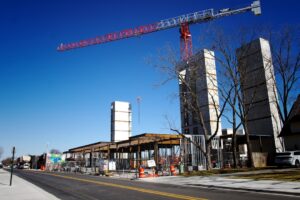
California approved high-speed rail in 2008 at $33 billion. Eighteen years later, the cost is $128 billion. Not a single track has been laid. The state spent $18 billion and has nothing to show for it but unfinished concrete pillars that locals call “Stonehenge.” Canada looked at this — the worst infrastructure failure in North American history — and proposed its own version at $90 billion, through a more difficult corridor, with no national standards, no workforce, no final funding approval, and a completion date of 2043. The question is not whether Canada can build a high-speed train. The question is whether $90 billion — three times the cost of the largest infrastructure project in Canadian history — should be spent on a train that duplicates airlines, benefits seven cities, and will be operated for private profit, when the same money could fund energy independence, critical minerals sovereignty, AI competitiveness, or a military that can actually defend the country. California’s answer arrived 18 years late and $95 billion over budget. Canada does not need to repeat the experiment to know the result.
Every source. Every contradiction. Yours to share.