Carney announced the largest Arctic defence investment in a generation — but most of the money was committed four years ago, the Yukon was left out entirely, and the government's own track record says the funds may never get spent.
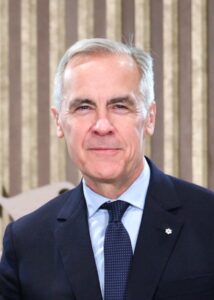
On March 12, Prime Minister Mark Carney stood in Yellowknife and announced $32 billion for northern defence — upgrades to Forward Operating Locations in Yellowknife, Inuvik, Iqaluit, and Goose Bay, plus new remote deployment hubs across the Arctic. He called it taking “full responsibility for defending our sovereignty.” The number is real. The ambition is real. The question is whether any of it will actually get built.1
Start with where the money comes from. The $32 billion is not new spending. It is drawn from a $38.6 billion NORAD modernization commitment made in June 2022 — nearly four years ago — by the same Liberal government under then-Prime Minister Justin Trudeau. That commitment covered twenty years of upgrades. Northern base infrastructure was explicitly part of the original announcement. What Carney did in Yellowknife was allocate money that was already committed. He put a line item on a promise his party made during its previous mandate.2
On a cash basis, the original NORAD commitment represents roughly $87 billion, according to officials in the Prime Minister’s Office — a figure that had not been widely publicized before the Yellowknife announcement. That $87 billion number reframes the $32 billion as barely a third of the total obligation.
The Liberal government’s track record on defence spending is the most important context for this announcement — and the most damaging. Under the 2017 defence policy, Strong, Secure, Engaged, the Department of National Defence ran a $12 billion shortfall in planned spending. In fiscal year 2022-23, the department lapsed $1.57 billion — money that was budgeted but never spent. The Parliamentary Budget Officer applied a 25% discount to Canada’s forecasted equipment expenditures due to a “high likelihood of delays” based on “recent experience and multiple PBO reports.”3
Former defence minister Bill Blair himself admitted that even if the finance department gave him the full budget allocation, he would not have been able to get all the money out the door in a single year. The institutional capacity to spend does not exist at the scale the government is promising.4
Conservative defence critics James Bezan and Bob Zimmer were blunt. “Instead of referring another four projects to the major projects office, the prime minister should immediately approve them and get contracts tendered as soon as possible,” they said in a joint statement. No construction contracts have been tendered. No builders have been selected. The government envisions the work taking “about 10 years.”5
❝ Instead of referring another four projects to the major projects office, the prime minister should immediately approve them and get contracts tendered as soon as possible.
— James Bezan & Bob Zimmer, Conservative Defence and Arctic Critics, March 12, 2026Bezan’s critique sharpened further after Carney’s March 26 announcement that Canada had officially hit the NATO 2% GDP spending target. “We are still waiting for new submarines,” Bezan said. “We are still waiting for new tanks and other armored vehicles. We are still a long way from having new warships.” He described the new Defence Investment Agency as “just another layer of bureaucracy that will further delay getting new weapons to soldiers.”6
❝ We are still waiting for new submarines. We are still waiting for new tanks and other armored vehicles for our army. We are still a long way from having new warships.
— James Bezan, Conservative Defence Critic, March 26, 2026Then there is the Yukon. The territory was left out of the announcement entirely. Yukon Premier Currie Dixon said he was “surprised and disappointed” that none of the $32 billion will flow to his territory — which is home to the largest city in the North and more than a third of the total northern population. “A plan to defend and transform Canada’s Northern and Arctic region cannot neglect one third of the North,” Dixon said.7
Beneath the numbers lies a more fundamental problem. Canada’s military is short up to 15,780 members across the regular and reserve forces. Defence analyst David Perry of the Canadian Global Affairs Institute said Canada “came under way more scrutiny and faced more reputational consequences with our allies than official Ottawa was willing to admit for many years.” Despite an uptick in recruiting, Perry says there remains a shortage of trained, combat-ready soldiers.8
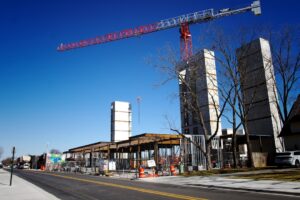
The money was committed four years ago. The shovels have not arrived.
Bases need people. Forward Operating Locations need personnel to operate them. Hangars need mechanics. Radar stations need technicians. The announcement funds infrastructure but does not address the staffing crisis that has hollowed out the Canadian Armed Forces over the past decade.
The pattern is familiar. In April 2024, the Trudeau government announced the “Our North, Strong and Free” defence policy with $8.1 billion in new spending over five years and $73 billion over twenty years. The PBO immediately flagged that the government’s own projections of reaching 1.76% of GDP were unlikely to be met. Canada’s defence spending had been at 1% of GDP as recently as 2014. For a decade, the Liberal government promised to ramp up spending and consistently fell short.
Now, under Carney, the government claims to have hit 2% in a single fiscal year — by spending $63 billion across more than a dozen federal departments and agencies, a method that counts expenditures far beyond traditional military spending. Canada crossed the threshold, as CBC News reported, “by the skin of its teeth” — still in the bottom one-third of the alliance alongside Belgium, Spain, Albania, and Portugal.9
Thirty-two billion dollars for the Arctic sounds decisive. But the money was committed four years ago and never spent. The department has a documented history of lapsing billions. No contracts have been tendered. No builders have been selected. The Yukon — a third of the North — was excluded. The military is short nearly 16,000 personnel. And the government’s own former defence minister admitted he could not spend the money even if he had it. Canadians have heard Arctic defence promises before. What they have not seen is the shovels.
Every source. Every contradiction. Yours to share.