A new Pollara poll shows 27% of Albertans would now vote to leave Canada — up seven points since December. If 'protest voters' follow through, that number climbs past 40%. The separatist petition has reached its signature threshold. A referendum could be on the ballot by October 19.
In June 2025, Pollara Strategic Insights measured support for Alberta separation at 22% — at the time, the highest the firm had ever recorded. By December 2025, that figure had retreated to 19%. In the latest Pollara “Alberta Spotlight,” conducted from March 16 to 25, 2026, with a sample of 3,200 Albertan adults, support for separation has surged to 27% — a five-year high and a seven-point increase in three months.1
That number alone is striking. But the second figure in Pollara’s data is more dangerous for Ottawa. A further 15% of Albertans who would vote to remain in Canada say they would consider voting to separate as a way to “send a message to Ottawa.” If even a fraction of those protest voters followed through, support for separation would clear 40%. Pollara’s chief strategy officer Dan Arnold says the numbers are likely a reflection that separation talk is becoming more mainstream.2
84% of Albertans are proud to be Canadian. 27% would vote to leave. That gap is the cost of a decade of being ignored.
The trajectory is not an aberration. It is an acceleration. In five years of Pollara tracking, Alberta separation support has moved from the high teens to 27% — with the steepest climb occurring in the months following the April 2025 federal election, which handed the Liberal Party a fourth consecutive victory. An Angus Reid Institute survey in February 2026 found a similar pattern: 29% of Albertans said they would vote to leave or lean toward voting to leave, with only 8% in the “definitely leave” category but 21% leaning that way.3
The Angus Reid data also showed the political divide. Among UCP voters — Premier Danielle Smith’s base — 16% said they would definitely vote to leave and 41% said they leaned toward leaving. That means a majority of the governing party’s own voters are at least open to the idea of an independent Alberta. Among NDP voters, 93% said they would vote to remain in Canada. The separation debate is splitting the province along partisan lines in a way that makes it increasingly difficult for Smith to navigate.4
The numbers matter because a referendum is no longer theoretical. On March 31, 2026, the Alberta Prosperity Project announced it had reached the 177,732 signatures required under the province’s Citizens Initiative Act to force a referendum. Jeffrey Rath, legal counsel for Stay Free Alberta, confirmed to Global News that the threshold had been met. Elections Alberta says it cannot verify the count until the petition sheets are formally submitted — the deadline is May 2, 2026. The province is planning to hold a referendum on several questions on October 19, and the separation question could be added to that ballot if the petition is verified.5
The referendum question, approved by Elections Alberta on December 22, 2025, reads: “Do you agree that the province of Alberta should cease to be a part of Canada to become an independent state?” The group began collecting signatures on January 3. Once submitted, Elections Alberta will count and verify the signatures. If verified, the question would first be forwarded to the lieutenant-governor in council, and the wording could be adjusted to make it clearer for voters before it appears on any ballot.6
❝ Do you agree that the province of Alberta should cease to be a part of Canada to become an independent state?
— Referendum question approved by Elections Alberta, December 22, 2025 — the question that could appear on the October 19 ballotThe petition’s path to this point was paved by the provincial government. In spring 2025, Smith’s UCP government passed Bill 54, which lowered the signature threshold for citizen-initiated referendums from roughly 294,000 to approximately 177,000 — cutting the requirement by more than 40%. In December 2025, the UCP passed Bill 14, which removed the requirement for a referendum question to align with the Constitution and retroactively undid a court ruling that had declared the original separation question unconstitutional. Both bills cleared the way for the Alberta Prosperity Project to proceed. Smith’s government effectively built the legal runway for a separatist referendum while publicly insisting the premier is not herself a separatist.7
The “Forever Canadian” counter-petition, organized by former deputy premier Thomas Lukaszuk, gathered more than 456,000 signatures — far exceeding the roughly 294,000 required under the previous, higher threshold. That petition asked Albertans to affirm that Alberta should remain in Canada. It was verified as successful by Elections Alberta in December 2025 and has since been referred to a legislative committee. The NDP has accused the UCP of procedurally delaying action on the Forever Canadian petition while fast-tracking the separatist one.8
The question Ottawa should be asking is not whether Albertans will vote to leave — the numbers strongly suggest they will not, at least not yet. The question is how separation support went from a fringe position to a five-year high under a federal government that has had 10 years to address western alienation and has instead deepened it at nearly every turn.
The Liberal record in Alberta is one of compounding grievances. The carbon tax was imposed over the province’s objection. The Impact Assessment Act — Bill C-69, which Alberta called the “No More Pipelines Act” — was passed in 2019 and later struck down as partially unconstitutional by the Supreme Court of Canada. The Northern Gateway pipeline was killed. Energy East was abandoned. Trans Mountain was purchased for $4.5 billion and eventually completed, but only after years of regulatory delays and a ballooning budget that reached $34 billion. The equalization formula, which sends billions from Alberta’s resource revenue to other provinces, has not been reformed in a decade despite a 2021 provincial referendum in which 62% of Albertans voted to remove equalization from the Constitution.9
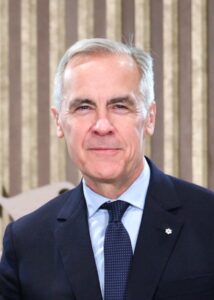
Mark Carney has done nothing to reverse the trajectory. Since becoming Prime Minister, Carney has not announced a single policy initiative aimed at addressing Alberta’s sense of alienation. The Pollara data shows that only 51% of Albertans believe Ottawa pays “a lot” or “some” attention to their province — barely half. The majority (56%) feel their province is treated unfairly by the federal government, a figure that has remained stubbornly high across multiple years of Pollara tracking.10
Carney’s high-profile floor-crossings have all come from Conservative ridings in Ontario and Atlantic Canada — not from Alberta. The Carney government’s flagship Alto high-speed rail project would connect Toronto and Quebec City, at a cost of $60 to $90 billion, without a single kilometre of track running west of Ontario. The 2026 federal budget contained no specific measures aimed at restoring Alberta’s trust in federation. The federal government is assembling a majority in Ottawa while the province that contributes the most per capita to national revenue is polling at 27% for separation.
❝ Alberta has treated SLCN as though they are chattel on the land, merely an afterthought in forced negotiations, not the first step in any potential secession. Alberta’s secession cannot happen without First Nations consent.
— Sturgeon Lake Cree Nation statement of claim, January 2026The referendum itself faces significant legal and constitutional obstacles. First Nations leaders have been vocal in opposition. Sturgeon Lake Cree Nation filed a lawsuit against the Alberta government in January 2026, arguing that separation cannot proceed without First Nations consent because Treaties 6, 7, and 8 — all signed with the Crown between 1875 and 1899 — predate Alberta’s entry into Confederation in 1905. “Alberta has treated SLCN as though they are chattel on the land, merely an afterthought in forced negotiations, not the first step in any potential secession,” the statement of claim reads.11
The Supreme Court of Canada’s 1998 Reference Re Secession of Quebec, codified in the federal Clarity Act, establishes that no province can unilaterally secede. A clear majority on a clear question would trigger a constitutional obligation to negotiate — not an automatic exit. The Alberta Prosperity Project’s referendum, even if it passes, would be the opening of a constitutional process, not the end of one. But the political symbolism of 27% support rising toward 40% — in a province where the governing party’s own voters are split — is the kind of number that changes the conversation in Ottawa whether or not the legal path leads anywhere.
There is a paradox buried in the Pollara data. Even as 27% of Albertans say they would vote to leave, 84% say they are proud to be Canadian. The majority of would-be separatists — 58% of those who would vote to leave — are still proud to be Canadian. This is not a population that hates the country. It is a population that feels the country’s government has consistently ignored its interests, taxed its resources, blocked its pipelines, and used its revenue to fund projects in other provinces while offering nothing in return except a promise that the system is working as intended.12
The “send a message” voters — the 15% who would consider voting to leave not because they want independence but because they want Ottawa to pay attention — are the real story. Those voters are not separatists. They are Canadians who have concluded that the only way to be heard in Ottawa is to threaten to leave. The fact that this group exists, and that it is growing, is not a failure of Alberta. It is a failure of federal policy.
In five years of Pollara tracking, support for Alberta separation has risen from the high teens to 27% — a five-year high. A further 15% of Albertans would consider a protest vote to “send a message to Ottawa,” pushing potential separatist support past 40%. The Alberta Prosperity Project has reached the 177,732 signatures needed to force a referendum — confirmed on the record by the group’s legal counsel to Global News on March 31. Elections Alberta will verify the count after the May 2 deadline. The province is planning to hold a referendum on October 19, and the separation question could appear on that ballot. Premier Danielle Smith’s government passed two bills lowering the threshold and removing constitutional review requirements. Among UCP voters, 57% either definitely want to leave or lean that way. Among NDP voters, 93% want to stay. The Liberal government has had a decade to address western alienation. In that decade, the carbon tax was imposed, the Impact Assessment Act was passed and partially struck down, Northern Gateway was killed, Energy East was abandoned, equalization was not reformed, and the Alto project was funded with $60 to $90 billion routed entirely east of Ontario. Mark Carney has not announced a single policy initiative aimed at restoring Alberta’s trust. And yet 84% of Albertans — including 58% of those who would vote to leave — are still proud to be Canadian. This is not a province that wants to leave the country. It is a province that has stopped believing the country’s government is listening. The 27% is the measure of that silence. The 15% who would vote to leave just to be heard are the measure of how long the silence has lasted.
Every source. Every contradiction. Yours to share.