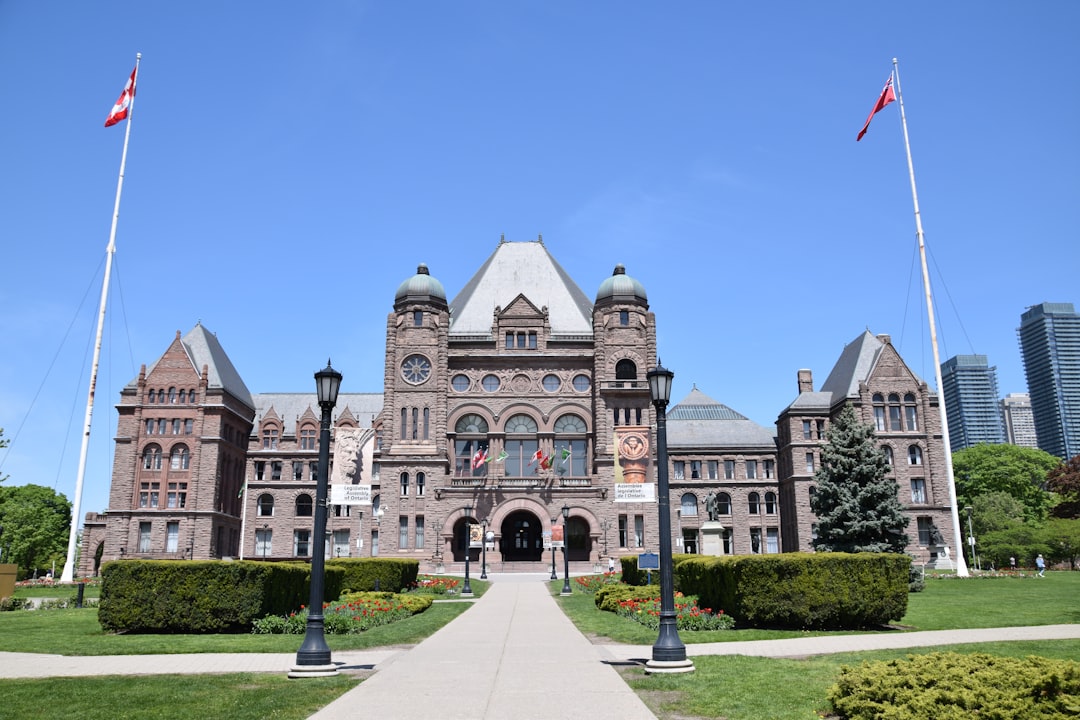
Three separate polls show roughly two-thirds of Ontarians oppose Doug Ford's plan to exempt himself, cabinet ministers, and their offices from FOI requests. Among decided voters, the opposition rises to 77%. Ontario's Information and Privacy Commissioner says the changes will make the province less transparent than any other jurisdiction in Canada.
Three separate polls conducted in March 2026 have reached the same conclusion. A Leger poll commissioned by the Canadian Taxpayers Federation found that 61% of Ontarians oppose Doug Ford’s plan to shield the premier, cabinet ministers, parliamentary assistants, and their offices from freedom of information requests. Among decided voters, that opposition rises to 77%. Only 19% of Ontarians support the changes.1
An Abacus Data poll commissioned by CUPE Ontario found 60% opposed, 24% in favour, and 16% unsure. Among Progressive Conservative voters — Ford’s own base — only 32% endorsed the changes. 53% of PC voters said MPPs should vote against the proposal. A Liaison Strategies poll found 65% opposed the retroactive exemption, with 47% strongly opposed. When Ontarians were told the changes would retroactively block access to records already being sought or before the courts, opposition jumped to 73%.2
Ford lost in court. Ford’s response was to change the law.
The changes, announced in mid-March, would amend Ontario’s Freedom of Information and Protection of Privacy Act to exclude records from the offices of the premier, cabinet ministers, parliamentary assistants, and their staff from public disclosure requests. The amendments would also extend the FOI response timeline from 30 to 45 days. Critically, the changes would be retroactive — meaning they would apply to records already being sought through existing FOI requests and court cases.3
That retroactive provision is not incidental. It is the point. In a years-long legal battle, Global News fought to access government calls Ford made on his personal phone. Both Ontario’s Information and Privacy Commissioner and a panel of three judges sided with Global News, ruling that the records should be public because Ford was using his personal device to conduct government business. After losing in court, the Ford government announced it would change the law to void the defeat. The retroactive provision would nullify the legal victory and ensure the phone records are never released.4
Ontario’s Information and Privacy Commissioner Patricia Kosseim has been direct in her opposition. In a formal submission to the government, Kosseim urged the Ford government to scrap the changes, warning they would make Ontario “less transparent than even the federal government” — and less transparent than any other province. She raised major security concerns, noting that the changes implicitly allow widespread use of personal emails and phones for government decision-making without any obligation to preserve or disclose those records.5
“Allowing them to conduct government-related business on their personal email accounts and devices significantly increases the risk of privacy breaches and cyberattacks,” Kosseim wrote. “These risks are further amplified when they keep these personal email accounts and devices after they leave government.” 71% of Ontarians in the Liaison Strategies poll said they are concerned that the lack of public record requirements may lead officials to keep sensitive government data on unsecured personal devices.6
❝ By excluding these records from the Act altogether, even if they relate to government business and are considered to be under the ‘control’ of a ministry, the bill would place Ontario’s legislation offside the rest of the country. Precluding the ‘control’ test would make Ontario’s FIPPA less transparent than even the federal law.
— Patricia Kosseim, Information and Privacy Commissioner of Ontario, formal submission to the Ford governmentFord’s response to the opposition has been to attack the commissioner and dismiss the criticism. “I’ve never seen a privacy commissioner go out and do media; it’s very politically driven, in my opinion,” Ford told reporters. “It’s very unfortunate we have a privacy commissioner that wants to politicize this.” The commissioner was appointed by the legislature in 2025. Her mandate is to protect privacy and oversee transparency. The government minister responsible for the changes, Stephen Crawford, also suggested the independent watchdog should not be taken seriously.7
Ford has framed the changes as necessary to protect privacy from Chinese cyberattacks and to bring Ontario in line with other provinces. The commissioner has explicitly rejected both claims. Other jurisdictions do not exclude records under the “control” of a cabinet minister from FOI. Ontario’s proposed changes go further than any province or the federal government. The commissioner wrote that “precluding the ‘control’ test would make Ontario’s FIPPA less transparent than even the federal law.”8
The FOI changes are not an isolated event. They are part of a broader pattern of transparency rollbacks under the Ford government. The Liaison Strategies poll found that 70% of Ontarians believe the government should continue publicly reporting hallway healthcare statistics, after Ontario Health stopped publishing the data in favour of “internal monitoring.” 78% of respondents want individual classroom sizes reported, after the government removed individual class size caps in favour of board-wide averages — obscuring overcrowding at the school level.9
The pattern is consistent: remove the data, remove the accountability mechanism, and then tell Ontarians the changes are about “modernization.” A majority of Ontarians — 64% in the Abacus poll — believe the FOI restrictions are more about reducing accountability than modernizing the system. The public is not confused about what is happening. The public simply cannot stop it.10
NDP Leader Marit Stiles called the proposed changes “outrageous and appalling.” “No government changes the FOI rules unless they are trying to hide corruption,” Stiles said. “We’re seeing the most corrupt government that we’ve seen in decades.” Liberal opposition member Stephanie Smyth said the changes make the premier “look very afraid of something that might come out.” The Canadian Taxpayers Federation’s Noah Jarvis called it “a fundamental erosion to the tools that ordinary voters and taxpayers have, to hold the government accountable.” Both the Ontario Liberals and NDP have pledged to reverse the changes if elected.11
But the commissioner’s warning carries a longer shadow. Kosseim warned that if the measures pass, “they are likely to be permanent.” Once a government exempts itself from transparency laws, future governments rarely volunteer to reinstate them. The precedent would apply not just to Ford’s cabinet but to every future premier and every future cabinet. The retroactive provision would ensure that records created before the law changed — records currently being fought for in court — would also be shielded permanently.12
❝ No government changes the FOI rules unless they are trying to hide corruption. We’re seeing the most corrupt government that we’ve seen in decades.
— Marit Stiles, Ontario NDP LeaderThe political cost is already measurable. The Liaison Strategies poll shows the Progressive Conservatives at 39% support, with the Ontario Liberals at 36% — a three-point gap that was far wider a year ago. The FOI changes, the healthcare data suppression, and the class size reporting removal are contributing to a tightening race in a province Ford won comfortably in 2022. 63% of Ontarians in the Abacus poll said PC MPPs should vote against the FOI changes. That included 53% of Progressive Conservative voters. Ford’s own voters are telling him to stop. Ford has not stopped.13
Three separate polls show roughly two-thirds of Ontarians oppose Doug Ford’s plan to exempt himself and his cabinet from freedom of information requests. Among decided voters in the Leger poll, opposition is 77%. Among Ford’s own Progressive Conservative voters, only 32% support the changes and 53% want their own MPPs to vote against them. Ontario’s Information and Privacy Commissioner says the changes will make the province less transparent than any other jurisdiction in Canada — including the federal government. 73% of Ontarians oppose the retroactive provision that would nullify a court ruling Ford lost. 71% are concerned the changes will lead to sensitive government data being stored on unsecured personal devices. 70% want hallway healthcare data to remain public. 78% want individual classroom sizes reported. The government’s response has been to attack the privacy commissioner, dismiss the polls, and bury the changes in a budget implementation bill. Doug Ford lost in court. Ford’s response was not to comply with the ruling. Ford’s response was to change the law. That is not modernization. That is not cybersecurity. That is a premier who used his personal phone to conduct government business, lost a court battle to keep those records secret, and is now rewriting the transparency laws of Canada’s largest province to ensure no one ever sees what was on the phone. 61% of Ontarians see it. 77% of decided voters see it. 53% of Ford’s own voters see it. The question is whether a single Progressive Conservative MPP will see it before the budget bill passes.
Every source. Every contradiction. Yours to share.