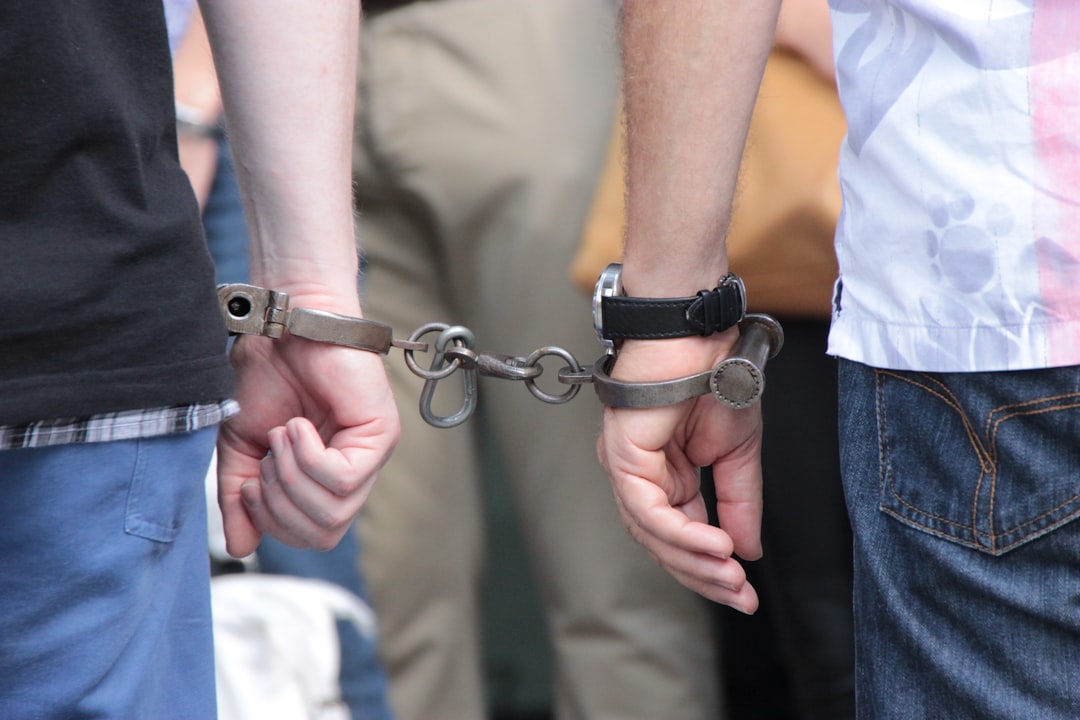
American law enforcement has arrested a Canadian Olympic-snowboarder-turned-Sinaloa-kingpin, a Brampton drug lord, and one of Toronto's most wanted murder fugitives — while Canadian agencies let them walk out of the country.
On March 23, a Homeland Security task force arrested Adrian Vincent Walker at a residence in Tupelo, Mississippi. Walker, 28, was one of Canada’s top-25 most wanted international fugitives — wanted by the Toronto Police Service on a Canada-wide warrant for first-degree murder and attempted murder. The charges stem from a May 7, 2024 shooting in Toronto’s York District that killed 31-year-old Trevor Dalton John and wounded a woman. Walker had previously served more than three years in a Canadian prison for aggravated assault.1
After the shooting, Walker fled Canada. He crossed the U.S. border illegally, was never inspected by immigration officials, and settled in Tupelo under an alias. He was also found to be illegally in possession of a firearm. Canadian law enforcement did not find him. The U.S. Marshals Service, Homeland Security Investigations, and the ATF did — as part of Operation Take Back America.2
“This was a serious case,” said U.S. Attorney Scott Leary. “A Canadian national wanted for murder entered our country illegally and was living in our midst. Seeking sanctuary in Mississippi is not a smart move.”
❝ A Canadian national wanted for murder entered our country illegally and was living in our midst. Seeking sanctuary in Mississippi is not a smart move.
— Scott Leary, U.S. Attorney, Northern District of MississippiWalker is not an isolated case. On January 22, the FBI arrested Ryan Wedding — a former Canadian Olympic snowboarder turned alleged Sinaloa Cartel drug lord — in Mexico City. Wedding had been on the FBI’s Ten Most Wanted Fugitives list since March 2025, with a $15-million reward for his capture. He is accused of running a transnational cocaine empire generating more than $1 billion per year in illegal proceeds, ordering at least three murders, and placing a $5-million bounty on a federal witness who was subsequently shot five times in Colombia.3
FBI Director Kash Patel called Wedding “a modern-day El Chapo” and “a modern-day Pablo Escobar.” Wedding had been hiding in Mexico for more than a decade under cartel protection. The RCMP worked with the FBI on the case — but it was American law enforcement that made the arrest, in a foreign country, of a Canadian citizen.4
Canada’s most wanted. America’s arrest.
❝ He is a modern-day El Chapo. He is a modern-day Pablo Escobar.
— Kash Patel, FBI Director, on Canadian fugitive Ryan Wedding, January 2026Days before Walker’s arrest, a 62-year-old Brampton, Ontario man named Guramrit Sidhu pleaded guilty in U.S. federal court to leading a criminal organization that trafficked hundreds of kilograms of methamphetamine and cocaine from the United States into Canada. Over a six-week span in 2022, Sidhu orchestrated eight drug shipments totalling approximately 523 kilograms of meth and 347 kilograms of cocaine — with an estimated wholesale value of $15 to $17 million. He was extradited from Canada and is now in U.S. federal custody.5
His alleged lawyer, Brampton criminal defence attorney Deepak Paradkar — who once went by “cocaine lawyer” on social media — was arrested in November 2025 for allegedly advising Wedding to murder an FBI witness. He faces extradition to the United States.6
The pattern is consistent and damning. Canada’s most dangerous criminals are not being caught by Canadian law enforcement. They are fleeing Canadian jurisdiction — crossing the border, hiding under aliases, living in foreign countries under cartel protection — and being captured by the FBI, ICE, the U.S. Marshals, and the ATF.
Walker evaded Canadian authorities for nearly two years. Wedding evaded them for over a decade. Sidhu’s drug trafficking ring was dismantled by a joint FBI-RCMP operation — but the case was prosecuted in U.S. federal court, with U.S. charges, under U.S. law.
The border question is unavoidable. Walker entered the United States illegally and was never detected. He was living under an alias in a small Mississippi town with an illegal firearm. No Canadian agency flagged him at the border. No Canadian agency tracked him after he fled. The U.S. Department of Homeland Security announced the arrest — not Toronto Police, not the RCMP.
As DHS put it: “Thanks to ICE, one of Canada’s most wanted criminals is behind bars.” ICE has placed an immigration detainer on Walker. He will face U.S. federal charges for illegal entry and firearm possession before being deported to Canada to face the murder charges.
None of this is an argument for American immigration enforcement tactics. The No Kings protests and the killings of Renee Good and Alex Pretti are a separate and serious conversation. But the operational question remains: why are American agencies catching Canada’s most wanted criminals while Canadian agencies cannot?
A Canadian murder suspect on the top-25 most wanted list fled the country, crossed the border illegally, and lived under an alias in Mississippi until ICE arrested him. A Canadian Olympic snowboarder became one of the world’s most prolific drug lords and hid for a decade until the FBI caught him in Mexico City. A Brampton man ran a multi-million-dollar drug pipeline into Canada and is now pleading guilty in an American courtroom. In each case, the fugitive escaped Canadian jurisdiction. In each case, American law enforcement brought them in. The question is not whether Canada takes public safety seriously. The question is whether its institutions can actually deliver it — or whether that job has been quietly outsourced to the country next door.
Every source. Every contradiction. Yours to share.