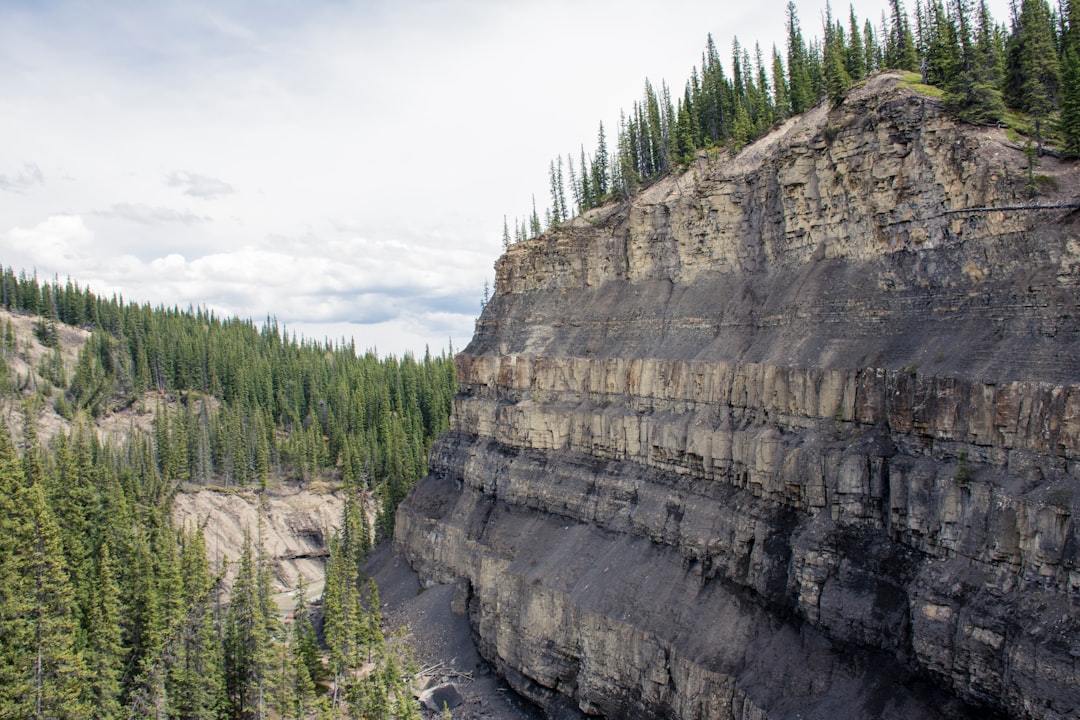
Beaver Brook in Newfoundland could supply 5% of the world's antimony — a mineral critical to ammunition, night vision, and semiconductors. China Minmetals has kept it shuttered since 2023. The price has risen tenfold. The U.S. is spending $2 billion on a worse deposit. Canada's sits idle.
Canada has one antimony mine. It is called Beaver Brook. It sits 45 kilometres southwest of the town of Glenwood in Newfoundland. At full capacity, it could produce roughly 6,000 tonnes of antimony concentrate per year — about 5% of global supply. It would be the only primary antimony mine in North America. It has been shut down since 2023. The owner is China Minmetals — a Chinese state-owned conglomerate that describes itself as a “national team” and the “main force to ensure the security of resources.”1
Ottawa has done nothing to change this.
Antimony is not an obscure industrial metal. It is a strategic mineral used in ammunition, armour-piercing rounds, infrared sensors, night-vision equipment, flame retardants, lead-acid batteries, semiconductors, and solar panels. The U.S. Department of Defense classifies it as critical to national security. Every NATO military depends on it. China controls the vast majority of global antimony mining, refining, and processing.2
China shut down our mine. Banned exports. Raised the price tenfold. Ottawa did nothing.
❝ Antimony has been in a persistent deficit for years, driven by declining ore grades, stagnating Chinese mine investment and strong demand growth from the solar sector.
— BMO analysts Helen Amos and George HeppelIn August 2024 — one year after China Minmetals shuttered Beaver Brook — Beijing announced that antimony exports would require a government licence. In October, Chinese shipments fell 97% in a single month. In December, Beijing escalated further: it banned antimony exports to U.S. military end users specifically — the first time China had directed a critical minerals restriction against a single country. The price at Rotterdam doubled, then doubled again. From roughly US$5,900 per tonne before the shutdown, antimony has surged past US$50,000.3
The contrast between Washington and Ottawa’s response is the story. The U.S. has committed more than $80 million in Defence Department funding to Perpetua Resources, which is developing a lower-grade antimony deposit in Idaho. The federal financing commitment for that project runs up to $2 billion. In February 2026, President Trump announced Project Vault — a strategic reserve for critical minerals backed by a $10 billion Export-Import Bank loan. Secretary of State Rubio convened 54 countries for the first Critical Minerals Ministerial, launching FORGE, a new preferential trading bloc for strategic minerals.4
Canada attended the FORGE ministerial. It was not among the eleven countries that signed a bilateral critical minerals framework with Washington. The U.S. is spending billions to develop a worse deposit. Canada’s better deposit sits idle in Chinese state hands.
Industry observers believe the shutdown is strategic, not commercial. Anthony Vaccaro, president of The Northern Miner, told a 2025 conference that there are rumours China uses Beaver Brook as a market weapon: keep it on care and maintenance, and if the price stays high and other Western projects come online, turn the tap back on, flood the market, drive prices down, and discourage competitors from entering.5
“Well, lo and behold, Newfoundland and Labrador has the biggest antimony potential mine in all of North America,” Vaccaro said. “Who owns it? Why isn’t it in production? The Chinese own it. We have this critical asset that’s Canadian, on care and maintenance by the Chinese.”
❝ Newfoundland and Labrador has the biggest antimony potential mine in all of North America. Who owns it? Why isn’t it in production? The Chinese own it. We have this critical asset that’s Canadian, on care and maintenance by the Chinese.
— Anthony Vaccaro, President, The Northern Miner, 2025 conferenceChina Minmetals is not a commercial mining company in any Western sense. It is one of China’s largest state-owned resource conglomerates — with Communist Party leadership embedded in its operations, spanning mining, metals production, trading, and engineering across dozens of countries.
The Carney government has not ordered a national security review of Beaver Brook. In 2022, Ottawa ordered Chinese companies to divest from several Canadian lithium exploration firms on national security grounds. The same logic has not been applied to North America’s only antimony mine.6
Instead, Carney’s government is deepening its commercial relationship with Beijing. This week, Finance Minister Champagne and Bank of Canada Governor Macklem were in Beijing signing a Canada-China Financial Working Group agreement — with Brookfield at the table. The government’s stated goal is to increase Canadian exports to China by 50% by 2030. At no point has the government publicly addressed why a Chinese state enterprise is allowed to keep Canada’s most strategically significant mineral deposit shut down while the price rises tenfold and Western allies scramble for supply.
Carney’s $35-billion Arctic military spending plan, announced in March, includes fast-tracking the Grays Bay Road and Port — infrastructure that would directly benefit MMG, another Chinese state-linked mining company with interests in Canada’s North. The same plan designates 5 Wing Goose Bay in Labrador as a Deployed Operating Base for F-35s and NORAD training — an hour’s drive from the dormant Beaver Brook mine in Chinese state hands.7
Canada has one antimony mine. It could supply 5% of the world. It is owned by a Chinese state conglomerate that shut it down in 2023 — one year before Beijing weaponized antimony exports, banned sales to U.S. military users, and watched the price rise from $5,900 to over $50,000 per tonne. The United States is spending $2 billion to develop a worse deposit in Idaho. Canada’s sits idle. Ottawa forced Chinese divestment from lithium exploration in 2022 but has not touched the antimony mine. The government is instead in Beijing this week signing financial cooperation agreements with the same state that controls the mine. Antimony goes into every bullet, every infrared sensor, every piece of night-vision equipment that Canadian soldiers and NATO allies depend on. And Canada’s only source of it belongs to the country that banned it from reaching Western militaries. This is not a market failure. It is a sovereignty failure — and it has a government that chose not to act.
Every source. Every contradiction. Yours to share.