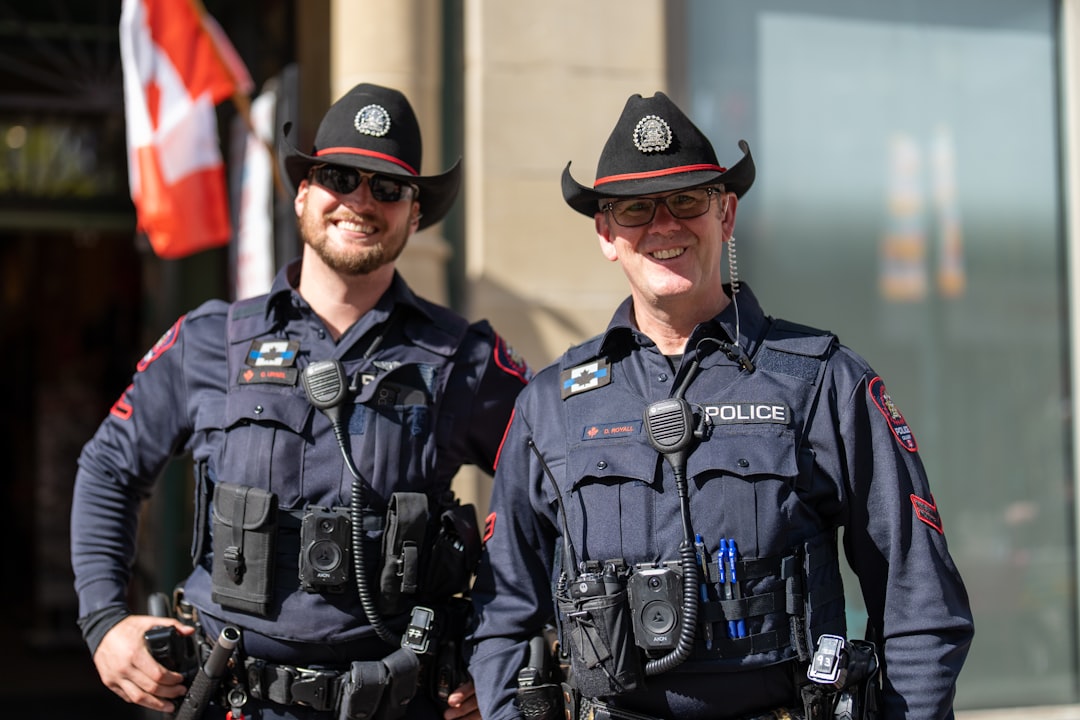
Three days before the auditor general called RCMP recruitment 'unsustainable,' the force published a strategy prioritizing 'diverse life experiences' and equity hiring quotas over filling 3,400 vacant front-line positions.
On March 20, the RCMP published its National Recruitment Strategy for 2026–2029. The document says the force will set minimum quotas on equity hiring to give preference to “those with key skills and diverse life experiences.” It outlines programs like the Diverse and Inclusive Pre-Cadet Experience — known as DICE — which pairs applicants from “racialized and underrepresented groups” with RCMP mentors and sends them to a three-week training session at the academy in Regina before they even apply.1
Three days later, on March 23, Auditor General Karen Hogan tabled a report in Parliament that described the RCMP’s recruitment system as broken. The force is short at least 3,400 front-line officers. Nine of 11 divisions have vacancy rates above the critical threshold of 7%. Processing a single application takes an average of 330 days. Only 6% of applicants receive an offer. The auditor general concluded: “The status quo is no longer sustainable.”2
❝ Without fundamental changes, the RCMP will not be able to hire enough new police officers to meet operational demand.
— Auditor General Karen Hogan, March 23, 2026The timing tells the story. The RCMP published a strategy built around equity quotas and diversity pipelines three days before the country’s top auditor said the force cannot fill the positions it already has.
The staffing crisis is not abstract. It means fewer officers on the streets in communities that depend on the RCMP for their only law enforcement. The worst vacancy rates are in the places that need police most: Northwest Territories at 22.9%, Nunavut at 21.5%, Manitoba at 17.5%. These are remote and northern communities — many of them Indigenous — where the RCMP is the only police service available.3
The RCMP introduced a Flexible Posting Plan in 2023 that let new officers choose the province or territory of their first assignment. It succeeded in attracting more applicants — 46,000 over 30 months, well above the 12,000-per-year target. But it produced catastrophically uneven staffing. British Columbia ended up with 110 more officers than it needed. Alberta was short 63. Saskatchewan was short 39. The North was abandoned.4
The RCMP realized the policy was producing uneven results within four months. It did nothing to correct it.
3,400 officers short. 330 days to process one application. The priority: equity quotas.
The application process itself is the bottleneck — not the diversity of the applicant pool. Of the 46,000 applications processed during the audit period, 37% were deemed unsuitable, 24% stopped communicating with the RCMP, 15% dropped out voluntarily, and 18% were still being processed. The most common reasons applicants gave for withdrawing: the process took too long, they failed fitness requirements, or they took another job.5
❝ This is not a pipeline problem. Interest in joining the RCMP is strong. The issue is not attracting people; it’s getting them through the process and into uniform in a reasonable amount of time.
— Brian Sauvé, President, National Police FederationThe National Police Federation — the union representing RCMP officers — was blunt. “This is not a pipeline problem,” said president Brian Sauvé. “Interest in joining the RCMP is strong. The issue is not attracting people; it’s getting them through the process and into uniform in a reasonable amount of time.”
Yet the RCMP’s new recruitment strategy leads with equity, not efficiency. The 2026–2029 plan describes its mission as attracting “diverse, skilled future police officers.” It outlines a DICE program for “newcomers to Canada, persons from diverse ethnic and cultural groups, individuals from racialized groups,” and “all employment equity seeking groups.” It references a DREAM workshop — the Diversity Retention and Employee Advancement Model — held in Halifax in 2024. It describes residency thresholds that have been lowered for permanent residents to “attract a greater diversity of candidates.”6
None of these programs address the central finding of the auditor general’s report: the RCMP does not know how many officers it needs, sets recruitment targets below its actual staffing requirements, takes nearly a year to process a single application, and cannot fill positions in the communities that need them most.
The question is not whether the RCMP should reflect the communities it serves. The question is whether a force that is 3,400 officers short — with 97% of applications missing processing targets and vacancy rates above 20% in the North — should be organizing its recruitment strategy around equity quotas rather than getting qualified applicants into uniform as fast as possible.
The consequences of the staffing crisis are real and documented. The auditor general warned of “a higher risk of police officer absences and burnout,” reduced capacity to “prevent and investigate crime,” and diminished ability to “maintain peace and order and contribute to national security.” Front-line officers in understaffed divisions are carrying caseloads designed for teams that do not exist.7
Public Safety Minister Gary Anandasangaree responded by saying the RCMP accepts all the auditor general’s findings and will “modernize recruitment processes.” He also said the RCMP is “strengthening its focus on outreach to ensure recruitment reflects the diversity of Canada.” The government’s response to a staffing emergency was to promise both faster processing and more equity outreach — without acknowledging that the latter has been consuming institutional energy while the former has gotten worse.
The RCMP is 3,400 officers short. Nine of 11 divisions are in crisis. The force takes 330 days to process a single application. Only 6% of applicants get an offer. Vacancy rates in the North exceed 20%. The auditor general said the system is unsustainable. And three days before that report landed, the RCMP published a recruitment strategy organized not around filling those 3,400 empty positions but around equity quotas, diversity pipelines, and programs with acronyms like DICE and DREAM. The communities waiting for officers — many of them Indigenous, many of them remote, many of them in the regions the equity strategy claims to serve — are not waiting because the RCMP lacks diverse applicants. They are waiting because the RCMP cannot process the applicants it already has. The priority is wrong. The vacancies are real. And the communities that need police the most are the ones paying the price.
Every source. Every contradiction. Yours to share.